
Although some Triops owners prefer to hatch Triops in tanks, they are bound to live there for the rest of their lives. We highly recommend using a hatching dish mentioned in the earlier section. Using a hatching dish allows you to see your pets in their early stages. Read on to learn how to manage your Triops tank the right way.
Likewise, it is the closest thing to the natural habitat of Triops, which are ponds. In addition, given that the newly hatched Triops are barely visible to the naked eye, it would be easier to see them in a smaller container with the aid of a black piece of paper or cardboard during the first few days.
The primary benefit of hatching your eggs in a hatching dish is that it will be less complicated for the baby Triops to find food in a smaller area, which increases their chance of survival.
When your Triops become big enough, usually eight days after hatching, you will likely place them in a larger tank. Selecting the right tank is crucial for optimizing the growth of your prehistoric pets. Specific types of tanks or regular plastic/glass containers you probably have at home can work. Please read the following tips: changing the water, selecting your tank, and maintaining it. And what to put inside your tank. As your pets grow, it comes with the responsibility to correctly manage your Triops tank.
Transition From Distilled to Tap/Bottled Water
Using distilled water throughout the entire life of your Triops will, unfortunately, kill your Triops. Newly hatched Triops need things to feed on which are not present in distilled water. Your Triops eggs packets, envelopes, and kits already come with (or are mixed with) dried sand or gravel and dried plant materials. It provides food for your Triops for the first few days after hatching. Likewise, this is also the reason why some kits contain hatching nutrients. When you do, all of these ensure that the Triops are in a managed environment to ensure hatching and survival.
When you see your Triops grow a bit, you may add tap water, regular spring water, or purified bottled water to your hatching dish/tank. It would be best if you also considered transferring your Triops to a bigger tank. It allows your Triops to adapt to the environment slowly they will be living in for the rest of their lives. There are a few essential things to consider when doing this:
✓ Water Temperature – First, you must ensure that the tap/bottled water you place in the hatching dish/tank is the same temperature as the water in it. You can do this simply by placing the tap/bottled water under a light source and using a thermometer to measure the temperature. Another considerably simpler method is putting the tap/bottled water in a container beside your hatching dish/tank for about an hour before placing the new water inside the tank. Doing this means the water is roughly the same temperature and will not shock your Triops.
✓ Amount of Water – The tap/bottled water you must place in your hatching dish/tank should not be more than 25% of the water already in it. Do this regularly to ensure that your Triops adapt to this new environment appropriately. If using a hatching dish, consider transferring your Triops to a tank when your water level is already close to the rim. Ensure that the water temperature in the tank is equal to the one in the hatching dish. If you are already using a tank, do not fill it up too much and change the water only if necessary (I will discuss the details on how to change the water later on).
Whether or not you can use tap water for your Triops has been a contention among Triops manufacturers, owners, and experts. Some Triops owners use tap water, while others opt to use bottled water. We believe that transitioning from distilled water to tap/bottled water is more critical than water selection. So, you must follow our directions to ensure that you do not shock the Triops with the change in environment.
Selecting the Right Tank
Proper tank selection is vital in ensuring that your Triops survive. But, this does not necessarily mean you have to spend much on your tank. Many often favor fish tanks because they look more pleasing to the eye. But using items you may already have on hand is also an option. To manage your Triops tank right, you have to pick the right tank.
Like selecting your hatching dish, any glass or plastic container bigger than your hatching dish is a good option for a tank. Remember, if the container is safe for holding your food or liquids, it is suitable for being used as a tank. Read the following tips on what you should consider when selecting a tank for your prehistoric pets:
✓ 1 Gallon/4 Liter Tank – Adult Triops need 0.5-0.75 Gallons/2-3 liters of water to live. That means your tank should hold at least 4 liters of water. Ensuring that your Triops live in a comfortable environment. We recommend the 4.5-liter containers that you can buy at your local supermarket. Anything bigger than this would also be good to ensure that your Triops can fully grow without competing for space.
✓ The Depth of your Tank isn’t Too Important – If you had to choose between a deep container with a small surface area or a shallow container with a larger surface area, you should go for the external tank with a large surface area. It is because Triops do not swim as much as you may think. They prefer to settle in the bottom of the tank to search for food and walk around. It is also crucial because the Triops need a relatively large water surface area to allow oxygen to dissolve into the water. A shallow but large surface area would allow the Triops to breathe correctly and live their whole lifespan.
✓ Your Tank Must Be Clean – As previously mentioned in the discussion on hatching dishes, your tank must also be spotless. Ensure you wash your tank before using it – you may also want to use hot water to clean it well. Take note that if your container holds chemical/toxic substances, do not use them. Materials such as plastic may absorb these substances that can leach into your Triops, causing them to die. One of the crucial reasons it is essential to manage your Triops tank is to keep it clean. Keep the pets healthy and help them live longer.
What You Can Put in your Tank
There are a lot of questions about what you can put in your tank. It has been discussed and encouraged to place aquarium plants in your tank. But, the bigger question is: what else can you put in? After all, Triops owners want to pamper their pets. It is also important to note that your Triops can survive in an empty container and that these additions are optional. But to manage your Triops tank right, you must know the appropriate and beneficial things to put in your tank.
✓ Substrate – This is the material you usually see at the bottom of aquariums. A soil substrate will work well because this replicates the natural habitat of Triops. But, you can also use sand or gravel substrates. We highly recommend using substrates purchased from pet stores as these are the safest for freshwater animals. It would be best to get one that does not alter the pH level of the water like the ones from Flourite.
✓ Aquarium Decorations – You can use any form of decoration for aquariums. We recommend placing the decorations in water for 24 hours and washing them before placing them in the tank.
✓ Other Species – Raising daphnia with your Triops would be a good idea since they also serve as food for your prehistoric pets. Likewise, you may want to consider raising Golden Apple Snails with the Triops since the snails don’t compete with the needs of the Triops and maybe a solution if you have algae problems.
10. Filters and Bubblers – For filters, it is better to use an under-gravel filter, like this one from Lee’s. You must only use a filter when the Triops are already a few millimeters significant and visible to the naked eye (using filters before this stage may suck the baby Triops into the filter). However, you may use a bubbler before you can use a filter. A bubbler will assist the baby Triops in growing since increased oxygen helps with development.
• Light and Heater – As mentioned earlier, it is best to keep the temperature of your water at 71.5°F/22°C. Light helps maintain this temperature, but a heater may do better since you can set the temperature. This submersible heater from Elite works well and is only 25 watts.
Maintaining the Cleanliness of the Tank
You will likely notice that your tanks will get dirty quickly. It is normal and is the primary reason under gravel filters may be helpful. And why we recommend removing any excess food found in your tank. When your tank’s water becomes cloudy, it indicates that you should start replacing the water regularly. It means that bacteria and dirt are already forming. The following are the tips on how to manage your Triops tank to maintain its cleanliness:
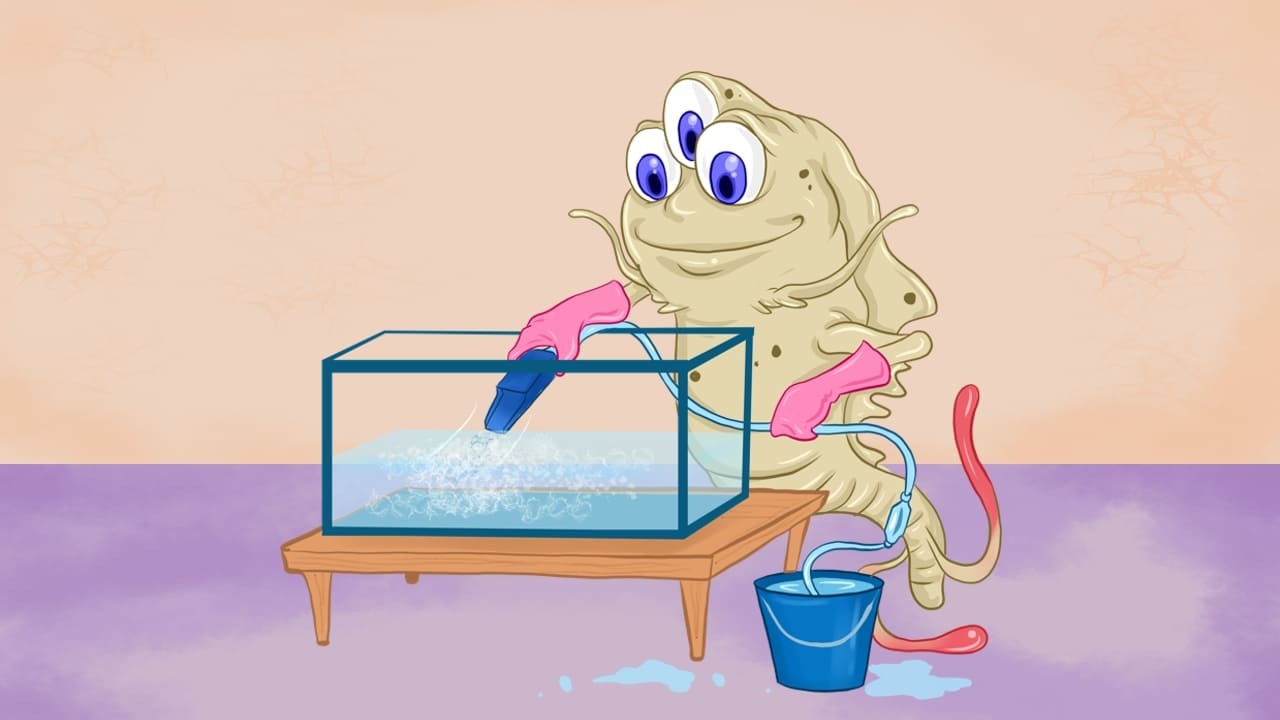
• Replace 25% of the Water Weekly or as Needed – Remove 25% of the water from the tank and throw it out. Replace this with the same amount of tap/bottled water, preferably at the same temperature as the water already in the tank. Do this to avoid shocking and killing the Triops. Do this weekly or as often as needed (in this case, try to do it in two-day intervals). When your Triops are more prominent and significant, you can do replacements. As much as one-third of the total contents of the tank. You can do this with a siphon tube for your convenience.
• Remove Any Fluffy White Clusters – This is bacteria, and you need to remove it immediately. You can use a medicine dropper or small turkey baster for this.
• Scrape Off the Algae – If your water begins turning green, this is an indication that algae are already forming. Aside from scraping the algae off, you can reduce the food you place in your tank and the distance of the light (since algae feed off both). Knowing the exact amount of food to give your Triops is necessary. Providing about 12 hours of brightness while maintaining the water’s temperature is ideal for ensuring your tank will have no algae. Adding Golden Apple Snails can also help solve this problem. Adding algaecide will not kill your Triops, but it can be detrimental to the growth of your prehistoric pets. So, it is best to do away with it.
• Keep the Tank’s Surroundings Clean and Away from Direct Sunlight – It is best not to spray air fresheners, pesticides, or disinfectants around the tank. Because these contain toxic substances that kill your Triops. Placing the tank away from direct sunlight prevents algae growth. But more importantly, it reduces the risk of overheating the water.