
As Triops originally lived and came from the wild, you must wonder how long they are supposed to live. You must think about how long your Triops will stay with you and what you should do to let them live their maximum lifespan.
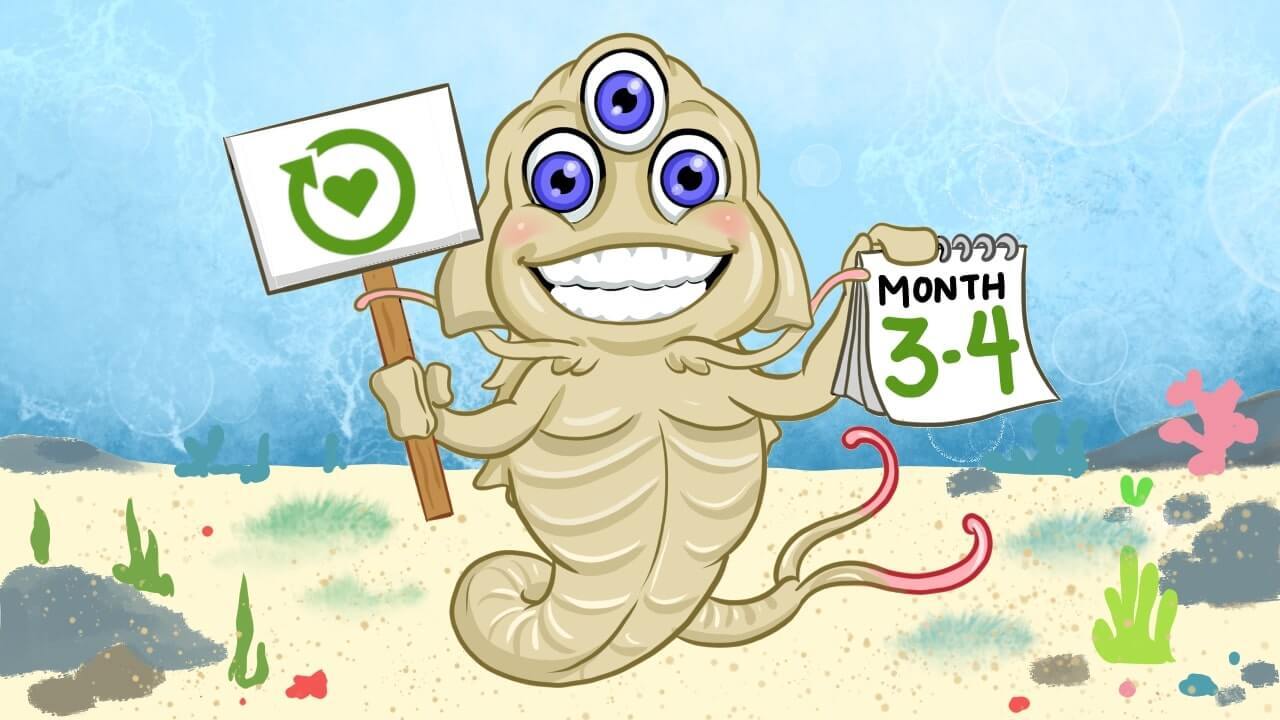
Triops have a relatively limited lifespan compared to other pets. Triops typically survive for eight weeks (two months). However, they can live up to fourteen weeks (three and a half months). Triops evolved as time passed; they can not live longer than this timespan.
Read on to see the factors that affect how long Triops live and how they can survive in the wild and captivity.
Triops Life Span ( How Long Do Triops Live? )
Given that Triops’ lifespan is shorter than most animals and that they only live for a maximum of three and four months, see how the difference between captivity and being in the wild affects their life span.
How Long Does Triops Live In The Wild?
In the wild, Triops can survive up to three to four months. But that’s it; it’s maximum time they can live. Although, it is a little longer than those Triops in captivity. It’s because they are in their natural habitat, which is a huge factor in their survival. Like any other animals, they can live if they are in the environment they are meant to have.
Temporary ponds are the natural home of Triops. The Triops have developed a survival strategy that involves hatching and laying eggs as soon as possible before the ponds dry up because the ponds are transient. It explains why they were able to outlive the extinction of the dinosaurs.
How Long Does Triops Live In Captivity?
They can live up to two months in captivity ( your Triops tank ). Depending on some factors ( which I will explain later ), your Triops can usually live in this average timespan.
Triops in captivity may have some advantages, such as a regular supply of food where they wouldn’t have to look for it. Or a safe place for them against the prey that might be around. But the owners might overlook some important things they need when taking care of Triops.
For example, water temperature, because there is only a specific temperature range where Triops can survive. If not followed, they might die immediately. Another one is the pH level of the water because there is also a certain pH level that Triops can tolerate; if not accurate, they can also die. These are the things that Triops owners usually forget, which leads to the Triops passing a little too early. And these are the factors they can access and have in their favor when they are in their natural habitat.
What Do They Need To Survive?
Since the lifespan of Triops is short but sweet, do not feel bad when they die. Especially when you know you tried hard to take care of them. Here are the basic needs of Triops to live their lifespan fully.
Temperature
To successfully take care of Triops in captivity, it is best to maintain temperatures between 22° and 31°C (72° and 86°F). They can endure temperatures as low as 15°C. However, this influences their growth, fertility, and ability to survive. They can also withstand greater temperatures, albeit 32°C and beyond, impact juvenile survivability, and temperatures above 34°C can kill adults.
Water
When Triops are adult, spring, distilled, or treated tap water are all acceptable. Although the specifics differ from species to species, Triops are pH sensitive. While some Triops are only present in highly alkaline waters, others in peat bogs. pH values below 6.0 can kill Triops longicaudatus, but it can withstand values as high as 10.0.
Food
Other packages contain Triops infant food and hatching nutrients, which are essential for your pets’ growth and development. For this, I only advise strictly adhering to the directions included with the packets. You can follow the rules to learn how much and how frequently to feed them. Even measurement tools are included in some packages to prevent overfeeding. If you add too much food, the water’s bacteria levels will rise, and your Triops will die.
Space
If possible, the container should be at least four liters (one gallon) in capacity. Each adult Triops needs two to four liters of water for the best population density. Don’t worry too much if you can’t provide them with an enormous container. The number of eggs laid by each individual will be less than it might be, but the Triops will still be healthy.
If you can only provide an “okay” tank size for them, do not worry! Even though the size of tanks affects the number of eggs they might lay in breeding, it doesn’t compromise their health, and they can still live healthily. It doesn’t affect survivability.
Triops Stages
The lifecycle of Triops is one of, if not the shortest that ever existed. Imagine just Eggs for 48 hours, babies for two weeks, and after that, they are fully grown. And will live two to four months, short but sweet indeed!
Eggs
It is the first form of Triops when they have life. After four days, they will start hatching and then be baby Triops for two weeks.
Adult Triops can tolerate a wide range of water quality, but the eggs are susceptible to the water’s osmotic potential. Eggs may not hatch if your water is not in the right state.
Triops avoid hatching out in an already established pool. Because the water has little dissolved organic and mineral material content after the reservoir fills, it shows that it is new and that no predators are around. No eggs will hatch after the mineral, and organic composition reaches a particular point because this suggests that either established predators may exist or the pool may not endure for very long.
On the other hand, remember that Triops (and pretty much anything else aquatic for that matter) will perish in pure distilled water since there won’t be anything for the baby Triops to eat. The debris that comes with the eggs is there to give the egg a suitably conditioned habitat with the right proportions of minerals and dissolved organics. If the tank is much bigger than four or five liters, it might not be enough, and the water might kill the newly hatched egg.
Baby Triops
For the first two weeks of their life, they are baby Triops. You can now feed them a healthy amount of food at this stage. Since Triops are not picky eaters, you can provide them with food that you also eat. You will be amazed at the wide variety of food they eat. It is also the part where they grow; they double in size daily. After that two weeks, they are fully grown and can immediately start breeding and laying eggs. It is also the part where you must be careful in the amount of food you feed them; overfeeding is crucial in this stage and can easily result in death.
Adult Triops
Two weeks old Triops are fully grown Triops. The usual size of adult Triops starts at 3 inches; this stage is where they can reproduce and lay eggs. But unfortunately, some Triops die right after laying eggs several times. It is one of the most common things that happens with adult Triops. But if they can survive past that “death after laying eggs,” they can live a little longer.
Adult Triops grow and breed fast when they eat the right amount of food; their water has the right temperature and pH level.
While your Triops have a very short lifespan, they nonetheless leave you with eggs so you can raise a new generation of fossilized creatures under your care. Have an unending supply of prehistoric pets!
Related Questions
1. Is it okay to keep Triops as pets at home?
Some people are concerned that the Triops eggs they buy are wild. Humans raise and take care of Triops eggs in labs so people can keep them as pets. So, that means it is legal. You can hatch even the eggs laid by your pet Triops. Remember that taking Triops from the wild is unethical and unlawful because some species are almost extinct in those countries. As a result, purchase your Triops eggs from a trustworthy toy or pet store; of course, it should be a respectable manufacturer. You can buy a packet of Triops eggs and assemble the remainder of the tank. You may also purchase Triops kits to avoid hunting down the additional supplies required for the setup. The kits from Toyops either come with a hatching dish or tank, and both options provide food for your prehistoric baby pets.
2. Why do Triops eat their fellow Triops?
Triops are cannibals. But as long as they have food, they will not eat the dead bodies of other Triops. They consume plant matter, algae, daphnia, and mosquito larvae in their natural habitat. They constantly consume food with a ravenous hunger to maintain a rapid pace of growth and reproduction.
Conclusion
Triops have a relatively limited lifespan compared to other pets. Several months is not that long, but as a Triops owner reading this, I know you are trying to make your prehistoric pets live their maximum lifespan. Some Triops will die earlier, and some will live up to the full, but as long as you consider the factors that help them live, you don’t have to feel wrong about them dying because that’s how it is, how they are, and how they live.